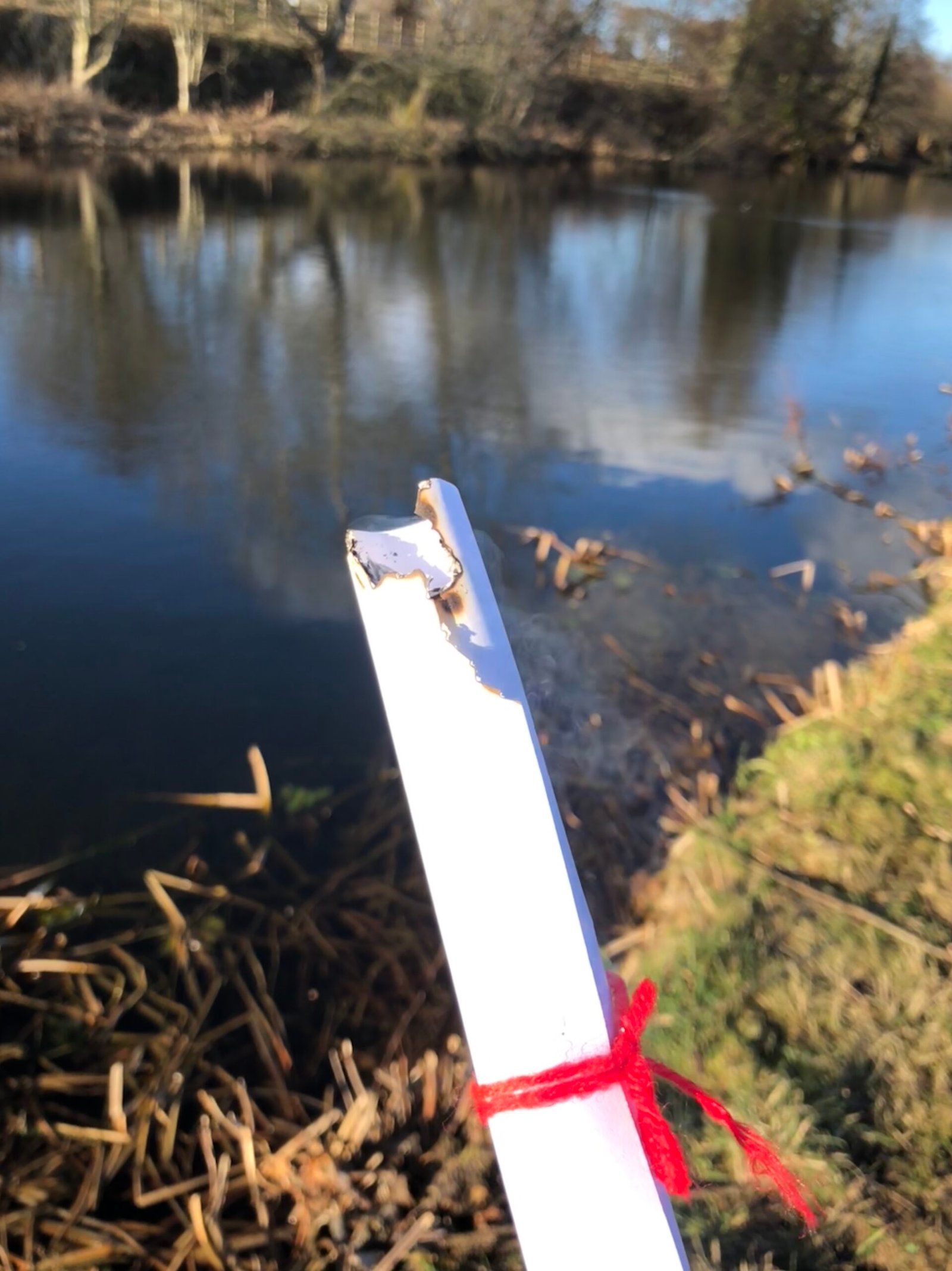
Glyphosate – How to protect yourself!
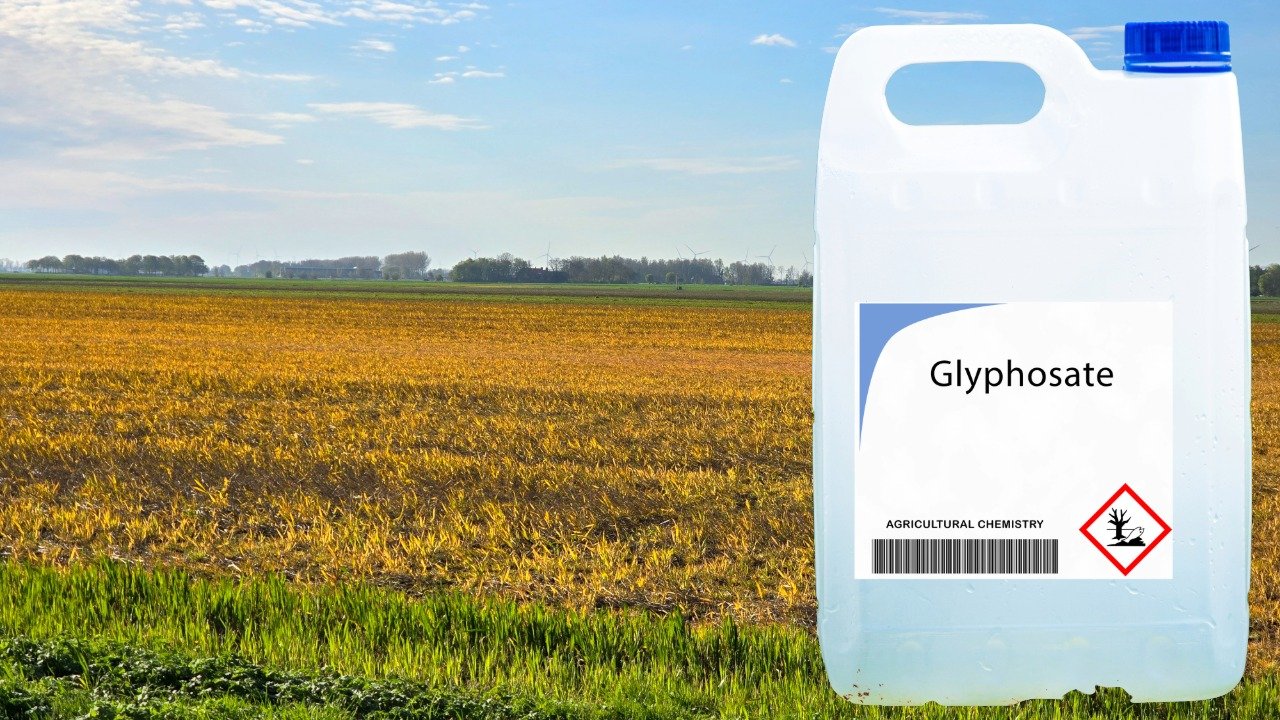
Glyphosate is a herbicide, which means it kills plants. It is a broad-spectrum, non-selective herbicide, a product that essentially kills everything. Many people know it better as the active ingredient in the widely sold product Roundup. In food production, glyphosate is used as a way of “ripening” crops before harvest. This was banned in the EU in 2023 but not in the UK. Weirdly and sadly, this has not made a lot of difference in the amount of glyphosate still available in our food. Some groups have been lobbying for a total ban, but this does not seem to happen anytime soon, and maybe we want to tread carefully here as new products are surfacing and this may not be for the better.
Why do we need to protect ourselves?
Glyphosate and health risks
Any spray used to kill something is a poison and, in differing degrees, unhealthy to ingest. Glyphosate is no different. The manufacturer Monsanto (owned by the pharmaceutical company BAYER) says the product poses no health risks to humans. However the World Health Organisation has linked intake of Glyphosate to cancer, mainly non-Hodgkin lymphoma.
There are also emerging evidence that glyphosate has a negative effect on the gastrointestinal tract, liver and kidneys. Glyphosate kills the “good bacteria” present on food and seems to have a similar effect on the gut biome. Simultaneously, it does not seem to have an effect on certain harmful bacteria, leading to a digestive system that doesn’t work as well. Glyphosate can also irritate the gut lining, over time the effects on the biome and gut lining may lead to lowered uptake of essential nutrients. This means that simple carbohydrates, fats and some entire proteins can be utilised by the body, but the uptake of essential vitamins like vit B complex (including B12 and folate), Vit D, Magnesium, Iron, Calcium, vit A and vit K (list can be made longer) is compromised.
Let me speculate
I just need to speculate here. Many people lack vit D, a vitamin essential to immune function, bone strength and muscle function. Some suggest this vitamin will support recovery from COVID infections. Our bodies produce vitamin D when we expose our skin to sunlight. However, we have demonised the sun and routinely cover our skin with high-factor sunscreen. Food sources are therefore more important. However, many do restrict the sources, which are fatty fish and egg yolks, and rely on fortified foods and supplements. BAYER produce supplements.
Another “in the news” vitamin is folate. As of December 2026, non- wholemeal wheat flour has to be fortified with folic acid. More on this in a separate article.
There are also suggestions that Glyphosate interferes with hormones, the endocrine system and reproduction. Of course, this requires so much more digging and researching. But would this explain why so many people have gut/skin problems as well as stress response problems?
How to choose foods wisely
Grains
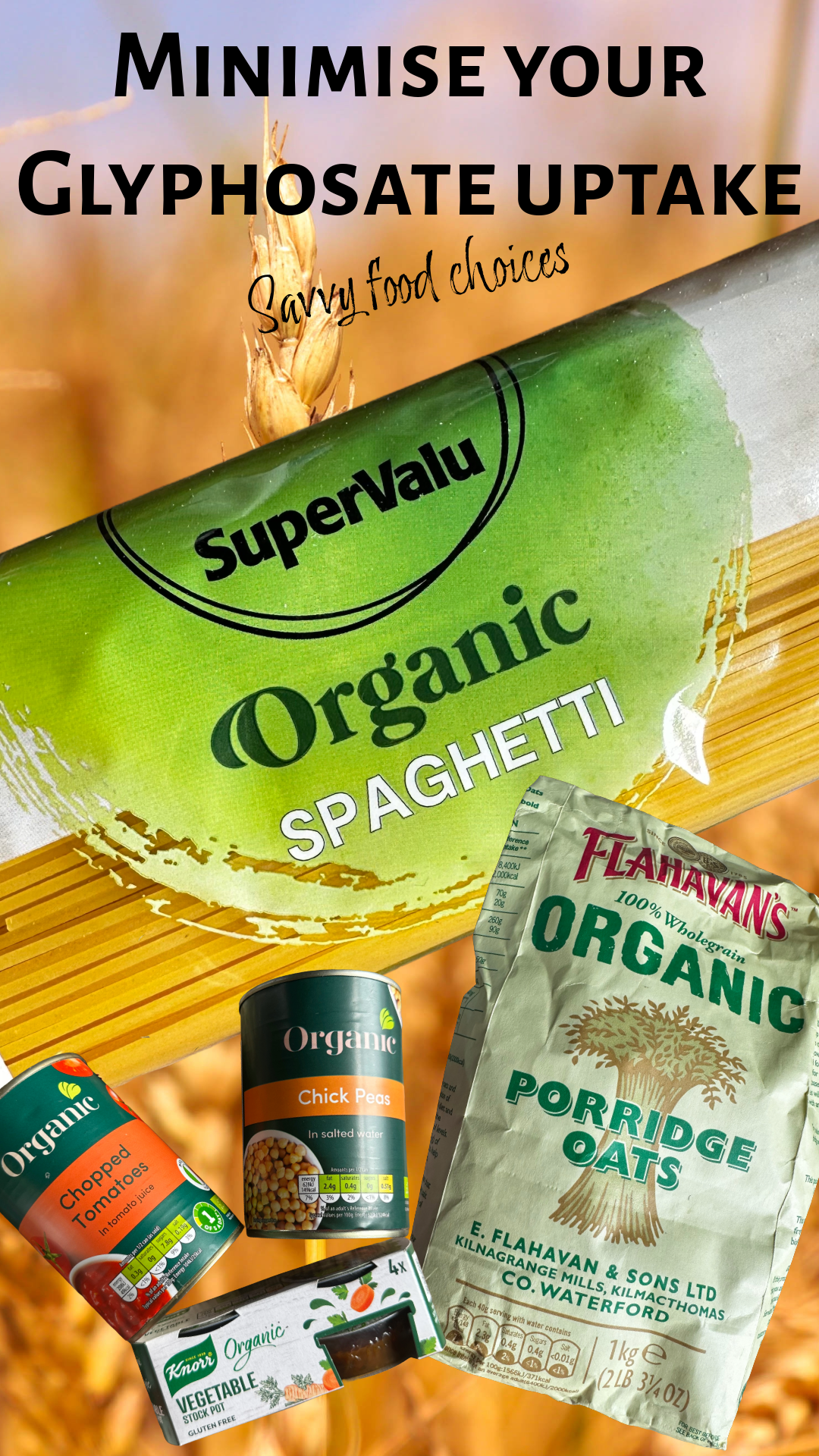
Going totally Organic may be or feel totally out of reach for many and I totally understand. The cost of living crisis has punched big holes in our pockets and simple items sometimes feel totally out of reach. This said, there are a few strategic swaps that can make a big difference. Grains are the biggest culprit. Oats and barley may contain up to 20mg glyphosate per kg. An easy swap here is to choose organic oats for the morning porridge and your baking needs. Barley is mainly used as animal fodder but also in alcohol. If you are using Barley in soups it is definitely worth looking for an organic source.
Wheat and Rye contain slightly less Glyphosate (10mg/kg) but are still significant. In fact, wheat may be the biggest culprit of them all, as it is found in so many everyday products: bread, pasta, flour and as an additive in many more. Swap for organic alternatives if you can, or swap pasta for potatoes, as the limits are far lower. If you have a garden, why not plant potatoes for a true treat of self-produced food?
Legumes
Soybeans may also contain 20 mg/kg, and if you are relying on soybeans and other legumes for your protein, it would be a good idea to look for organic alternatives. This also goes for milk replacements using soybeans or oats as the main ingredient. Another legume is chickpeas; if you love hummus, it is worth making your own as low-cost organic chickpeas are readily available.
Choosing foods wisely can be the beginning of a healthier lifestyle altogether. Just making one little change can bring about a sense of control over what we actually eat, which in turn can have a huge impact on our confidence. Try it, you have nothing to lose!
Conclusion
There is a saying, “we are what we eat”, and that is so true. Everything we eat will affect our body; glyphosate will too. The evidence is emerging slowly and is sometimes confusing, as is often the case when highly profitable products are involved. In any case, caring for our bodies should be of the highest importance; making some strategic changes to your shopping list may help you do just that.
How much is needed? You need 54mg of glyphosate to kill off 1 square metre of grassland vegetation; that is what is allowed in 2,5kg of oats or 5,5kg of wheat.
Links
Nettle Soup for some free organic food
Start journaling your health journey